
 How-to
7 Steps to Wash a King Size Comforter at Home
Last Updated: November 8, 2026
Quick Summary
To wash king comforter bedding at home, use a washer with a drum of at least 4.0 cubic feet, wash it alone on a gentle or bulky cycle with cold or cool water, and add an extra rinse. Use less mild detergent than you think you need, skip fabric softener entirely, and dry on low heat with dryer balls, redistributing the fill every 20 to 30 minutes.
- A king comforter is roughly 104 by 90 inches and needs a drum of 4.0 cubic feet or larger.
- A dry king comforter typically weighs 6 to 10 pounds, and a wet one can weigh twice that.
- A center agitator in a top loader will wrap and tear a comforter, so use a front loader instead.
- Never wring or twist a comforter when hand washing it in a bathtub with cool water and mild detergent.
- Pull the comforter out every 20 to 30 minutes while drying to redistribute the fill by hand.
Table of Contents
- Check Washer Capacity Before You Wash a King Comforter
- How to Wash a King Size Comforter in a Standard Washer
- How to Wash a Comforter in a Front Loading Washer
- How to Clean a Comforter Too Big for Your Washer
- How to Wash a Comforter by Hand in a Bathtub
- Drying, Pre-Treating Stains, and Removing Pet Hair
- Frequently Asked Questions
Check Washer Capacity Before You Wash a King Comforter
Most people who ruin a king comforter do it before they even try to wash king comforter bedding in a machine. They stuff it into a machine that can't handle it, and the drum fights back.
A king comforter needs a washer with a roomy drum, and a front loader is generally better than a top loader for bulky bedding. But drum size alone is not the test.
Why a Tightly Packed Drum Fails
When a comforter is crammed into the drum, three things go wrong at once. First, detergent and water cannot penetrate the compressed fill, so the center of the comforter never really gets clean. Second, the rinse cycle cannot flush soap out of the batting, which leaves stiff, dull patches once it dries. Third, the machine cannot balance the load, so it either throws an unbalanced-load error or bangs against the cabinet during the spin.
The Practical Fit Test
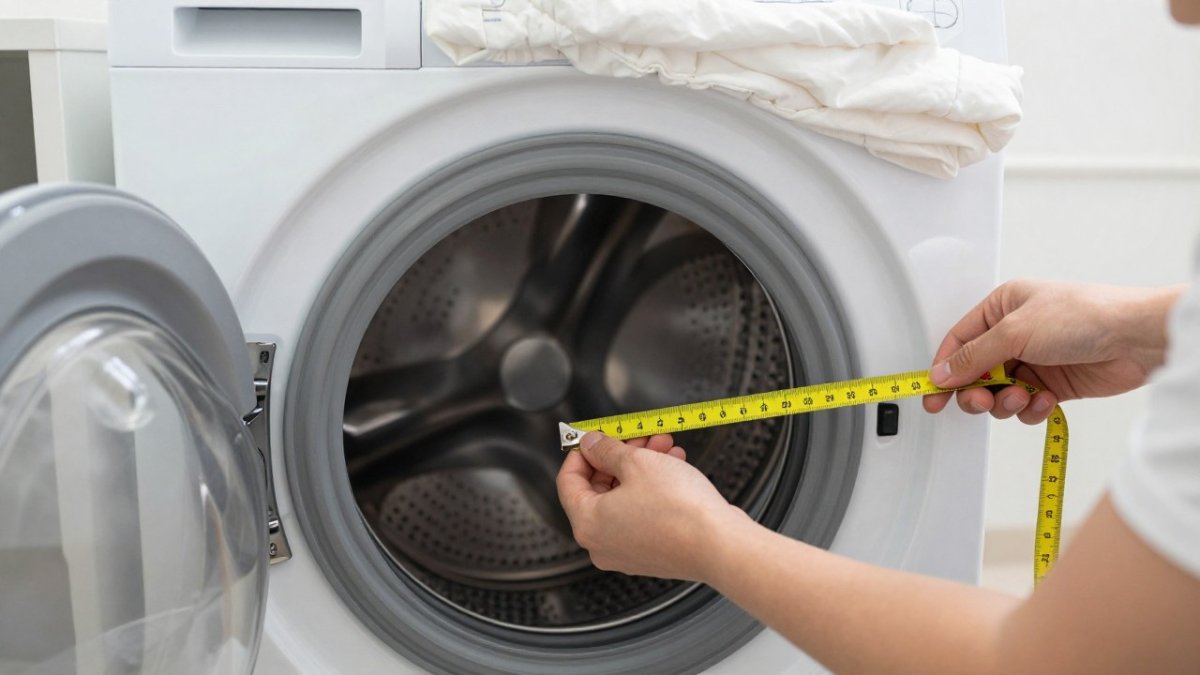
Grab a tape measure and check your washer's drum size. The manual or the sticker inside the door lists it, usually in cubic feet. Then run this check before you add any water:
- Drum size: 4.0 cubic feet or larger for a king comforter; 4.5 or more is safer for thick or down-filled versions.
- Fill test: load the dry comforter loosely. It should leave room to tumble, not sit packed against the drum walls. If you have to push hard to close the door, stop.
- Weight check: a dry king comforter typically runs 6 to 10 pounds. A wet one can weigh twice that, and a soaked down comforter gets heavy fast. Over 12 pounds dry usually means a very dense fill that needs more drum room, not less.
If your machine fails any of these, stop. The sections below cover what to do instead, including laundromat machines, bathtub washing, and professional service.
How to Wash a King Size Comforter in a Standard Washer
You can wash king comforter bedding in a standard washer if you load it right and pick the correct cycle. The key is to wash it alone, balance the load, and use the gentlest cycle your machine offers.
Start by reading the care label. That tag tells you the fill material, the shell fabric, and whether the comforter is machine-washable at all. Skip this step and you risk a ruined comforter and a costly replacement.
Read the Care Label and Match the Cycle to the Fill
The fill material decides everything: water temperature, cycle, and drying method.
| Fill Type | Water Temp | Cycle | Dryer Setting |
|---|---|---|---|
| Down | Cold or cool | Gentle, extra rinse | Low heat with dryer balls |
| Down alternative | Cool or warm | Gentle or bulky | Low to medium heat |
| Wool | Cold only | Gentle, no spin | Air dry flat |
| Synthetic | Cool or warm | Gentle | Low heat |
Load the comforter by itself. Wash separately, always.
Add a mild detergent, and use less than you think you need. Too much detergent leaves residue that clumps the fill and dulls the shell.
Set the wash cycle to gentle or bulky, choose cold or cool water, and add an extra rinse if your machine offers one.
How to Wash a Comforter in a Front Loading Washer
Front loading washers are the better choice for king comforters because they tumble the load instead of dragging it around an agitator.
Here's the sequence:
- Shake the comforter out and check for stains and pet hair
- Load it loosely, pushing it in rather than stuffing
- Add mild detergent to the dispenser, not the drum
- Select the bulky or bedding cycle
- Set cold or cool water
- Add an extra rinse
- Choose a low spin speed to avoid crushing the fill
One thing most guides miss: a front loader can throw an unbalanced load error mid-cycle with a heavy wet comforter.
When the cycle ends, pull the comforter out right away. Leaving it damp in the drum invites mildew.
How to Clean a Comforter Too Big for Your Washer
If your comforter won't fit, you have three real options: a laundromat with oversized machines, hand washing in a bathtub, or professional wash and fold service. The right choice depends on the fill material and how much time you have.
A laundromat's oversized machine is the fastest DIY route. Bring your own mild detergent, use the bulky cycle, and plan for drying time on top of the wash.
For readers who want to compare options before committing, our pricing page lays out per-pound rates with no hidden fees. And if you'd rather skip the trip entirely, you can schedule a pickup and have the comforter collected from your door.
Watch out: a comforter that's too big for your machine is also too big for most apartment dryers. A half-dry comforter with damp fill will grow mildew inside the batting within a day.
How to Wash a Comforter by Hand in a Bathtub
Hand washing a comforter in a bathtub is a solid fallback when the machine can't handle it.
The full process:
- Fill the tub with cool water and mild detergent
- Submerge and press the comforter for several minutes
- Drain the tub and press out the dirty water
This method works for down, down alternative, and synthetic fills. Wool needs extra care: use cold water only and air dry flat, away from direct sun.
If hand washing sounds like too much work, that's a fair call. Readers with questions about a specific comforter can reach out to our team before booking.
Drying, Pre-Treating Stains, and Removing Pet Hair
Drying is where most comforter damage happens. A comforter that feels dry on the outside can still hold moisture deep in the fill, and that hidden dampness causes clumping, lumping, and mildew. This section covers the three jobs that decide whether a washed comforter comes out clean or ruined: pre-treating stains and pet hair before the wash, drying it thoroughly, and checking for moisture the surface feel won't reveal.
Pre-Treat Stains and Remove Pet Hair Before Washing
Blot liquid stains with a clean cloth, then apply a small amount of mild detergent directly to the spot. Work it in gently with your fingers and let it sit for a few minutes before washing. For pet hair, run a rubber glove or a lint roller over the shell before washing, and add a dryer ball to the cycle to lift the rest.
Dry on Low Heat and Redistribute the Fill
High heat shrinks cotton shells and damages down fibers, so set the dryer to low heat or a dedicated bedding setting. Toss in two or three dryer balls to break up clumps as the fill dries. Pull the comforter out every 20 to 30 minutes, shake it out, and redistribute the fill by hand before putting it back. This prevents clumping and keeps the fill even from edge to edge.
Check Thick Seams and Baffles for Hidden Moisture
The surface of a comforter dries long before the center does. To check for hidden moisture, feel the thickest seams, the corners, and any baffle channels where the fill is stitched into boxes.
If your dryer is too small to let it tumble freely, air dry it flat on a clean surface and flip it once. Watch out: a half-dry comforter with damp fill will grow mildew inside the batting within a day, so when in doubt, run another cycle.
Maintain Between Washes
Between washes, shake your comforter weekly and spot clean as needed.
A king comforter is one of the hardest items in the house to wash well, and a machine that's too small turns a simple chore into a damaged comforter. Seamless Laundry Co. takes that problem off your hands with commercial-capacity equipment built for bulky bedding, 24-hour turnaround, and transparent per-pound pricing with no hidden costs.
Frequently Asked Questions
Can I wash my king size comforter at home?
Yes, if your washer has enough room. A king comforter needs a drum with enough room to move freely. Check the care label first, wash on a gentle or bulky cycle with cold water and a small amount of mild detergent, and dry on low heat with dryer balls until no moisture remains in the fill.
How big of a washer is needed to wash a king size comforter?
A useful test: push the dry comforter into the drum. If you cannot press a fist between the comforter and the drum wall, the load is too tight. In that case, use a laundromat's oversized machine or a hand-wash method instead of forcing it.
How do you wash a comforter that is too big for the washer?
Use a bathtub or a large commercial machine. For the tub method, fill with cool water and a tablespoon or two of mild detergent, submerge the comforter, and gently knead it for several minutes. Drain, press out water without wringing, rinse twice, then roll the comforter in towels to remove excess water before air drying or tumble drying on low.
How do you wash a comforter by hand without a washing machine?
Fill a clean bathtub with cool water and a small amount of mild detergent. Submerge the comforter and press it down repeatedly so soapy water moves through the fill, paying attention to stains and pet hair. Drain the tub, press out water, then rinse with fresh cool water until no suds remain. Roll it in towels to absorb water, redistribute the fill, and dry completely on low heat or a line.